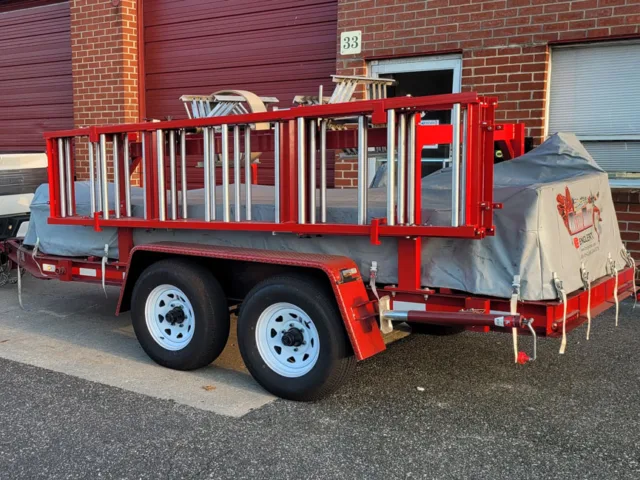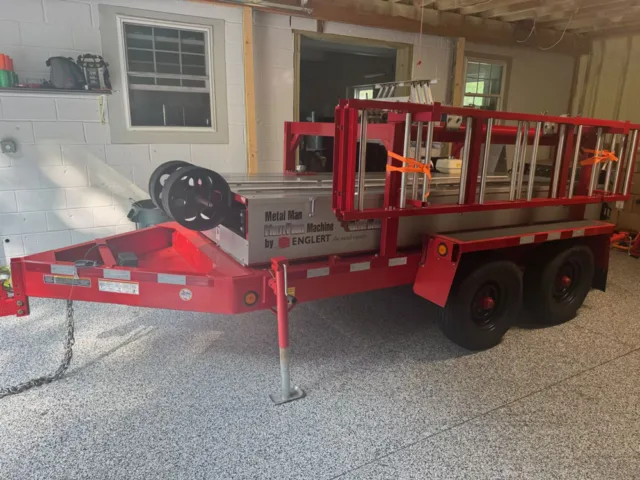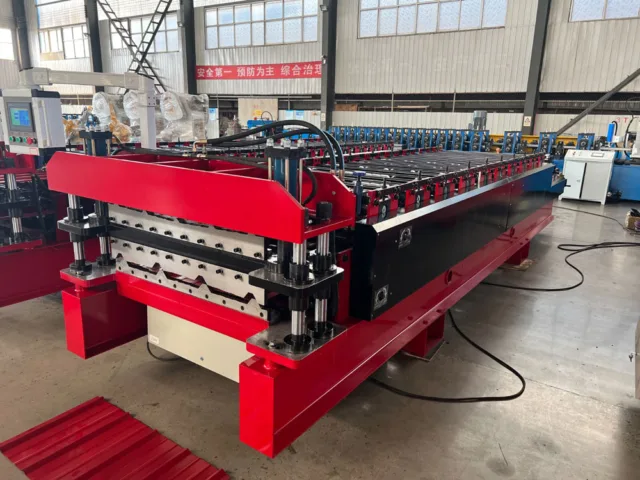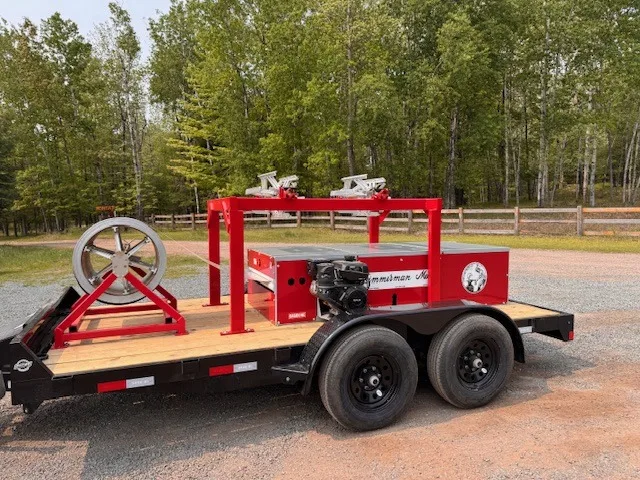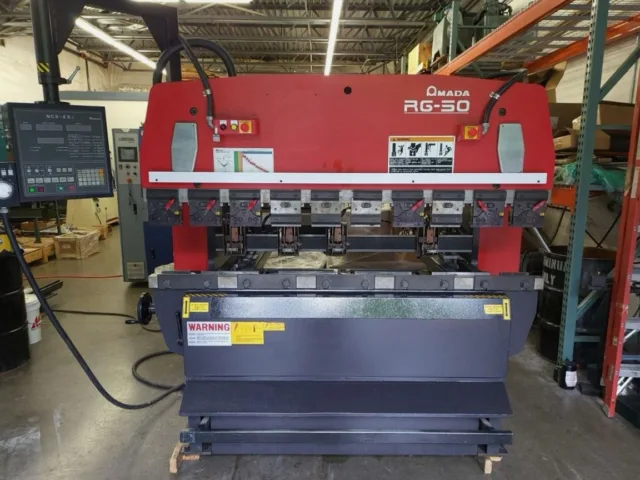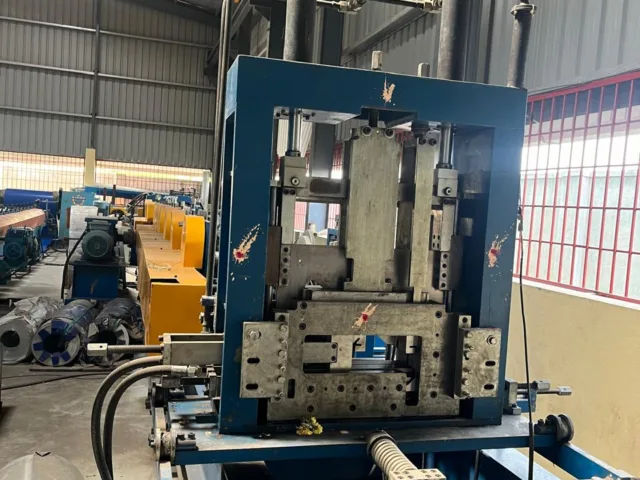
A trailer-mounted portable roll former usually goes home behind a pickup with a brake controller. Everything else, from a portable without its trailer to an in-plant line or a long folder, rides on a flatbed or step deck after a forklift or rigger loads it. The numbers that decide the job are the weight of the rig and the license it takes to tow it, flatbed freight that averaged about $2.60 to $2.85 a mile before fuel in August and September 2026, proper securement, crating for anything that ships LTL or overseas, and insurance, because a used machine shipped on a carrier’s standard terms may be covered for very little.
Towing a portable on its own trailer
Start with the real weight. New Tech Machinery lists the SSH MultiPro at 2,360 lb bare and 4,620 lb on its trailer, and the SSQ3 at 2,830 lb bare and 5,090 lb on the trailer, both about 18 feet 11 inches long, 7 feet 2-1/2 inches wide and 6 feet 3 inches tall with a reel on the trailer. Older SSQ II spec sheets list 4,300 lb for the bare machine, and one dealer listing gives 5,400 lb on the trailer, so weigh a used rig or budget for the heavier figure. Coil on the overhead rack adds up to a few thousand pounds more.
Then check the paperwork that follows the trailer’s rating, not its load. NTM lists its current trailer as a 12,000 lb tandem-axle unit; the GVWR on the VIN plate is the number that counts. Under federal rules a combination with a gross combination weight rating of 26,001 lb or more, towing a unit rated over 10,000 lb, needs a Class A CDL when driven commercially, so add your truck’s GVWR to the trailer’s before you assume you are exempt. For interstate business use, a USDOT number and a driver medical certificate are required once the combination is rated at 10,001 lb or more, and some states apply similar rules within the state.
- Brakes. State rules vary. Texas requires brakes on trailers over 4,500 lb gross at highway speeds, Virginia requires breakaway brakes at 3,000 lb and up, and 3,000 lb is the most common threshold nationally, so a loaded roll former trailer needs working brakes and a brake controller in most states. Federal rules for commercial vehicles require breakaway brakes that apply on their own and hold for at least 15 minutes.
- Before you hook up: tire date codes and pressure, wheel bearings, lights, the breakaway battery, the coupler and safety chains, and the tie-downs that hold the machine to the deck.
- Unload the reels. Take coil off the rack, lower anything that folds, and strap loose tooling and run-out tables so nothing shifts.
Flatbed, step deck or lowboy
Machines without a road trailer ship on open-deck freight. The federal width limit is 102 inches; there is no federal height limit, and most states set 13 feet 6 inches to 14 feet. Texas allows 14 feet and Pennsylvania 13 feet 6 inches before a permit is needed. The deck height decides how tall a machine can be.
| Trailer | Deck height | Legal freight height | Typical use |
|---|---|---|---|
| Flatbed, 48 to 53 ft | About 5 ft | About 8 ft 6 in | Most roll formers, folders, decoilers and slitters |
| Step deck | About 60 in upper, 38 in lower | About 10 ft to 10 ft 6 in | Taller machines and lines |
| Lowboy or RGN | About 18 to 24 in | About 11 ft 6 in to 12 ft | Very tall or heavy equipment |
What freight costs by distance
The freight data firm DAT reported national flatbed spot rates of $2.79 to $2.83 a mile in early August 2026 and $2.62 in mid-September, linehaul only and excluding fuel; the August rates were close to 40 percent higher than a year earlier. Applied to a full flatbed, that works out as follows.
| Distance | Linehaul at $2.62 to $2.83 a mile |
|---|---|
| 250 miles | About $650 to $710 |
| 500 miles | About $1,310 to $1,420 |
| 1,000 miles | About $2,620 to $2,830 |
| 1,500 miles | About $3,930 to $4,250 |
Add a fuel surcharge, tarping, permits for anything oversize, and loading and unloading at each end. Step deck and lowboy freight costs more per mile; one 2026 dispatch guide put step decks at about $2.50 to $4.00 a mile and lowboys at $3.50 to $8.00 or more plus permits. A crated gutter machine or small accessory can go LTL instead: freight-quote sites in 2026 put a single 1,000 to 1,500 lb pallet at roughly $150 to $500 for regional to 500-mile moves before liftgate and residential charges. Treat all of these as a starting point and get two or three quotes with the real weight and dimensions.
Loading and rigging
Most portables can be lifted from the trailer or skid with a forklift, but check the numbers. Forklifts are usually rated at a 24-inch load center, and capacity drops as the load’s center moves out. OSHA’s own example: a 5,000 lb forklift handling a load with a 28-inch load center can carry only about 4,285 lb, and attachments reduce capacity further. A long folder or an in-plant line at 7,000 lb and up usually calls for a larger forklift, two machines working together, or a rigging crew with skates and a crane. Lift only at the maker’s lifting points or under the frame, never by the rollers, shear or covers, and ask the seller for the shipping weight and lift points before the truck is booked.
Securing it on the truck
Federal cargo securement rules apply to the carrier, but you should know them before you sign a bill of lading. Tiedowns must hold against 0.8 g of forward deceleration and 0.5 g rearward and sideways. The combined working load limit of the tiedowns must be at least half the weight of the machine, so a 6,000 lb machine needs at least 3,000 lb of rated capacity, counted the way the rule counts it. An article between 5 and 10 feet long that is not blocked at the front needs at least two tiedowns, and a longer one needs two plus one for each additional 10 feet or part of it. Wheeled or tracked machinery of 10,000 lb or more falls under a specific rule requiring at least four tiedowns placed at the front and rear or at designed mounting points. Strap through the frame, never over forming rollers, the shear or the controller, and protect painted covers with edge guards.
Crating and export
Anything shipped LTL should be bolted to a skid or crated so a forklift can move it without touching the machine. For export, solid-wood crates, skids and dunnage must meet the international ISPM 15 standard, heat treated or fumigated and stamped with the IPPC mark, which USDA APHIS administers in the United States. Plywood and oriented strand board are not regulated, which is why many export crates use them. Check the destination country’s rules before the crate is built.
Insurance and claims
Under the Carmack Amendment a carrier is liable for actual loss or damage, but it may limit that liability to a value the shipper declares or agrees to in writing, and claims must be filed within the carrier’s deadline, which cannot be shorter than nine months. There is no federal cargo insurance minimum for general freight carriers; large brokers such as Uber Freight require their carriers to hold $100,000 of cargo cover. The trap is LTL: FedEx Freight’s 2026 rules limit liability on used or reconditioned goods to 10 cents a pound with no option to buy more, and Old Dominion caps added liability on used goods at $15,000. At 10 cents a pound, a 1,200 lb machine is covered for $120. Buy shipper’s interest cargo insurance for the machine’s value, photograph it before loading, and note any damage on the delivery receipt before the driver leaves.
Frequently asked questions
Do I need a CDL to tow a roll former?
It depends on the ratings, not the load. If your truck’s GVWR plus a trailer rated over 10,000 lb adds up to 26,001 lb or more and you are driving for business, a Class A CDL applies. Check your truck’s door sticker and the trailer’s VIN plate, and your state’s rules.
How much does it cost to ship a roll former 1,000 miles?
At August and September 2026 national flatbed averages, about $2,620 to $2,830 in linehaul, plus fuel surcharge, loading, tarping and any permits. A trailer-mounted machine you tow yourself costs fuel and a day or two.
Who arranges shipping when I buy from a listing?
Usually the buyer, unless the seller agrees otherwise. Agree in writing who loads, who pays the carrier and when risk passes, and get the machine’s weight and dimensions before you make an offer.
Browse used roll formers with shipping options shown on each listing. Sellers should read how to sell a used roll former fast; buyers moving smaller machines can start with our gutter machine guide, and shops moving folders should see the used CNC folder guide.