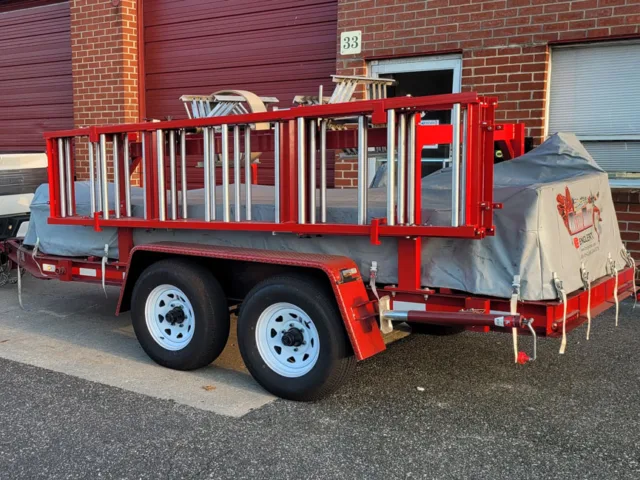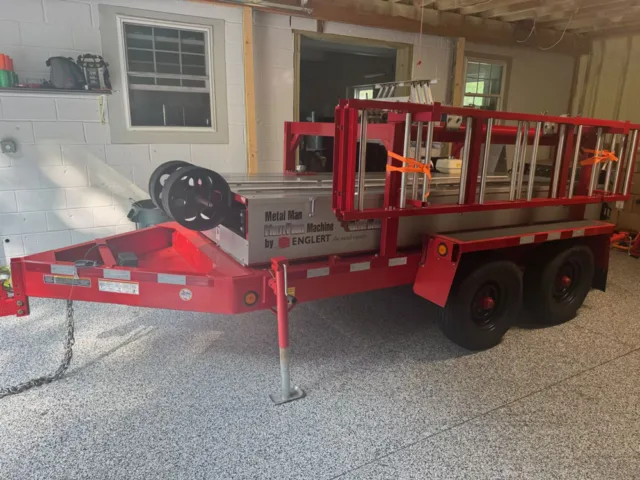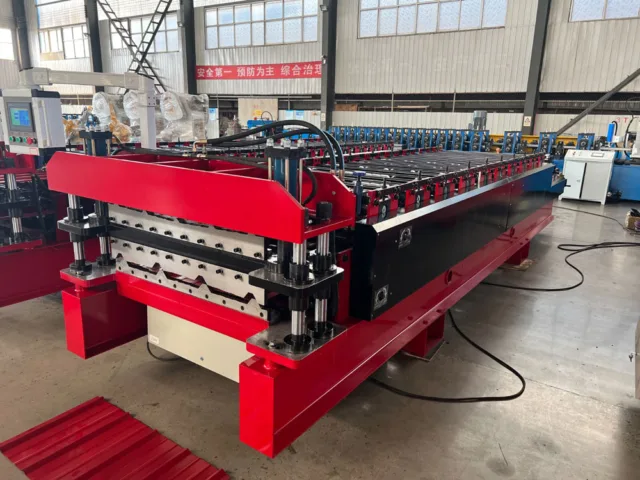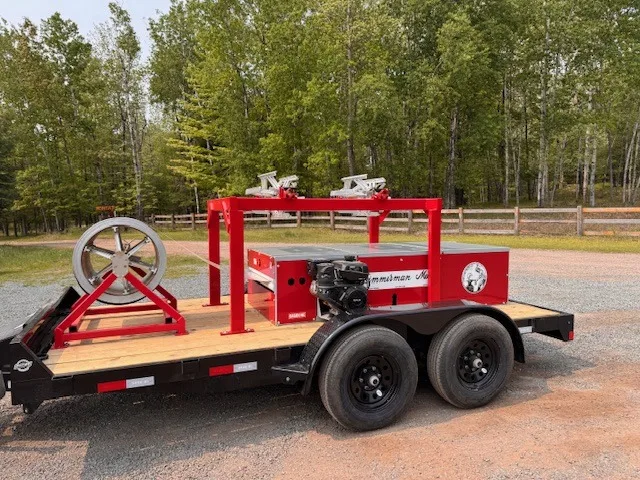
Buy gas if you form panels at the job site and cannot count on a 220-volt supply; buy electric if the machine lives in a shop or you mostly work where three-phase power is on hand. Gas is the faster and more flexible choice on most hydraulic portables, while electric is quieter, makes no exhaust and needs less upkeep. On current New Tech Machinery models you do not have to choose for good, because a quick-change pack swaps between the two in about ten minutes. This guide compares the options on speed, power supply, generators, noise, fumes, maintenance and resale, and ends with what to check on a used power pack.
What the power pack does
On a hydraulic portable roll former the power pack is a gas engine or an electric motor driving a hydraulic pump. The pump turns the drive rollers and works the shear, so the pack sets the machine’s top speed and decides where you can run it. Entry machines skip the hydraulics: NTM’s SSR MultiPro Jr. uses a 1.5 HP, 120 V single-phase motor drawing 18 amps that drives the rollers directly at about 30 feet per minute, with a manual shear. Englert’s MetalMan Multi-Panel offers a 13 HP Honda electric-start gas engine or a 7.5 HP, 220 V electric motor, and Englert’s smaller fixed-panel machines run on a 1.5 HP, 120 V motor.
The options side by side
New Tech Machinery publishes the same power choices for the SSH MultiPro, the SSQ II MultiPro and the SSQ3 MultiPro, which together make up most of the hydraulic portables on the used market. Speeds below are NTM’s figures for the SSQ II and SSQ3 on 60 Hz power.
| Power pack | Rating | Supply you need | SSQ II / SSQ3 speed | Best fit |
|---|---|---|---|---|
| Gas | 16 HP Briggs & Stratton | Fuel only | About 75 ft/min | Job sites with no reliable power |
| Electric, three-phase | 7.5 HP, 220 V, 18 A | 220 V three-phase service | About 72 ft/min | Shops and plants with three-phase |
| Electric, three-phase | 7.5 HP, 460 V, 9 A | 480 V service | About 72 ft/min (NTM 2025 article) | Industrial buildings |
| Electric, single-phase | 5 HP, 220 V, 20 A | 220 V single-phase | About 50 ft/min | Small shops on residential-style service |
The SSH MultiPro uses the same engine and motor options, and NTM rates it at about 60 feet per minute regardless of pack. NTM’s own numbers vary a little between its product pages and an August 2025 article (48 versus 50 feet per minute on single-phase, 72 to 75 on gas), so treat them as approximate and time the machine yourself.
Where gas wins
A gas pack makes the machine independent. You can run panels at the eave of a farm building or a new subdivision with no cords, no generator and no electrician, and on NTM’s commercial machines it is also the fastest option. That flexibility is why so many trailer-mounted machines are bought with gas.
The costs are noise, exhaust and upkeep. NTM itself describes gas packs as loud and as needing more maintenance, with filters, oil changes and leak checks. Exhaust is the serious one: NIOSH warns that carbon monoxide from small gasoline engines can reach deadly levels within minutes indoors or in partly enclosed spaces, even ones that seem well ventilated, and tells employers to keep such engines outside and at least 20 feet from doors and windows. OSHA’s exposure limit for carbon monoxide is 50 parts per million over an eight-hour shift. Never run a gas pack inside a shop, a garage bay or a closed trailer.
Where electric wins
Electric packs are quieter, produce no exhaust and can run all day inside a building, which suits a contractor who forms panels in the shop and hauls them to the job. There is no engine to service, so the maintenance list shrinks to the motor, cord, plug and starter plus the hydraulics that every pack shares. On three-phase power an electric pack keeps up with gas.
The limits are supply and cold. The pack has to match your service: a 460 V motor needs a 480 V supply, and the 5 HP single-phase option is the slow one at about 50 feet per minute. NTM also notes that electric motors lose efficiency in severe cold and recommends starting the machine early so the hydraulic fluid warms up. For winter work its advice is to keep the machine in the shop on electric.
Running an electric pack from a generator
It can be done, but the maker is not enthusiastic. NTM calls generators costly and inefficient, says they are not always compatible with its machines, and warns that an undersized generator, a long extension cord or dirty job-site power can trip the electronics and produce uneven panel lengths. Where a generator is used, NTM suggests sizing it at about one and a half times the machine’s rated draw and using the right cord gauge. Generator makers add that single-phase induction motors need three to five times their running watts to start. For scale, the 5 HP single-phase pack draws 20 amps at 220 V, which is about 4.4 kilowatts while running, before that starting surge. If you would be towing a large generator to every job, a gas pack is usually simpler and cheaper.
Noise and the crew
No roll former maker publishes decibel figures for its power packs, but the rules are clear. OSHA’s limit is 90 dBA averaged over eight hours, and at an 85 dBA average an employer must run a hearing conservation program with monitoring, annual hearing tests, free hearing protection and training. NIOSH lists lawn mowers and power tools at 85 to 90 dBA, which is a fair comparison for a small gas engine running all day. Budget for hearing protection with a gas pack, and think about the neighbors on residential jobs.
Maintenance compared
- Gas engine. Follow the manual for the engine on your machine. As an example, Briggs & Stratton’s published schedule for its Vanguard V-twin commercial engines calls for checking oil daily, changing oil and filter, servicing the air filter and replacing spark plugs every 100 hours or yearly, and replacing the fuel and air filters at 400 hours, more often in dust.
- Electric motor. Keep the cord, plug, starter and contactor dry and undamaged, and check that three-phase motors turn the right way after any wiring change.
- Hydraulics, both packs. NTM’s schedule is a weekly oil level check and a yearly oil and filter change, sooner in dusty or outdoor use or when the filter’s red indicator pops up.
- A second pack. NTM’s current product pages list an additional quick-change power pack at $9,300; an August 2025 article quoted $7,400. NTM’s advice to owners who work both indoors and on site is to buy both.
Resale
Most buyers of trailer-mounted machines want to run panels at the job, so a gas pack, or a machine that comes with both packs, appeals to the widest pool. A single-phase electric machine suits a shop buyer and can be a bargain for one, but it narrows the field. Whatever you have, state the engine or motor rating, voltage, phase and amps in the listing, because a buyer who cannot plug it in will not call twice.
What to check on a used power pack
- Read the engine or motor nameplate: model, horsepower, voltage, phase and amps, and confirm it matches your shop service.
- Compare the hour meter with the wear you see and the service records.
- Gas: start it cold, listen to the idle, watch for smoke, and check oil, air filter, fuel lines, battery and charging on electric-start engines.
- Electric: inspect cord, plug and starter, smell for burnt insulation and confirm rotation on three-phase motors.
- Hydraulics: oil level and color, the filter indicator, and leaks at the pump, valve block and hose fittings after ten minutes of running.
- Speed: time 20 feet of panel and compare it with the rated speed for that pack.
- Quick-change mounts and connectors: all present, and both packs if the listing says two are included.
The rest of the machine matters as much as the pack. Our used roll former inspection checklist covers rollers, shear, controls and trailer, and our repair and service guide lays out a maintenance schedule.
Frequently asked questions
Can I convert a gas machine to electric?
On NTM machines built for the quick-change power pack, yes: buy the second pack and swap it in about ten minutes. On older machines and other brands, ask the maker with the serial number, because mounts, hydraulic fittings and controls differ.
What size generator do I need for an electric roll former?
Ask the maker first. NTM suggests about one and a half times the machine’s rated draw and warns that undersized generators and long cords cause electrical faults and length errors. Remember that motors need several times their running watts to start.
Is single-phase electric good enough?
It runs the machine, but slowly. NTM rates its 5 HP single-phase pack at about 50 feet per minute on the SSQ II and SSQ3, against 72 on three-phase and 75 on gas.
Can I run a gas pack in the shop with the door open?
No. NIOSH warns that carbon monoxide from small gasoline engines can reach dangerous levels within minutes even in spaces that seem well ventilated. Run gas outside, at least 20 feet from openings, or use an electric pack indoors.
Browse used roll formers by power type, or go straight to New Tech Machinery and Englert listings.