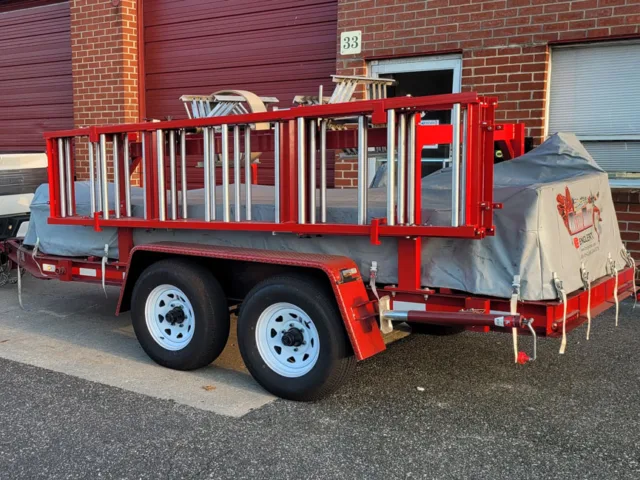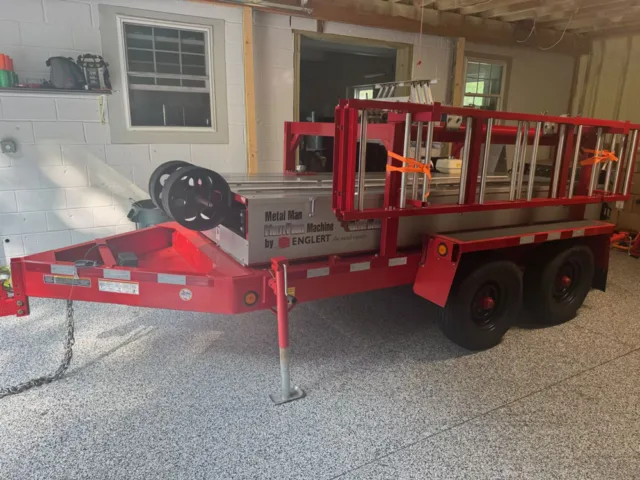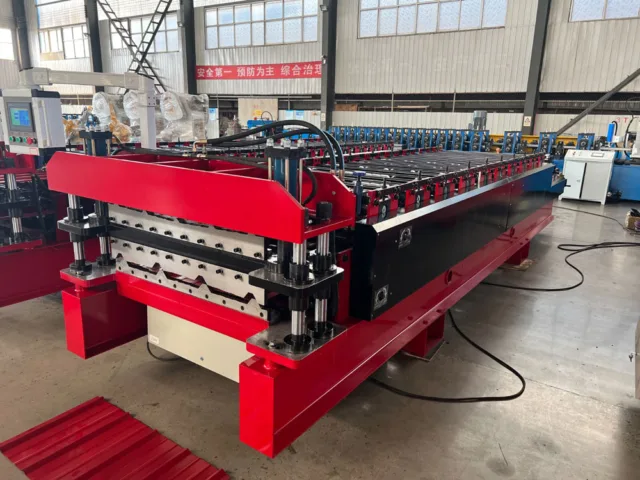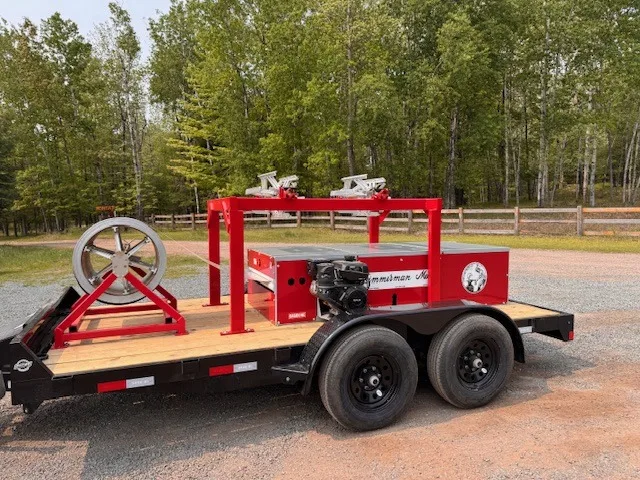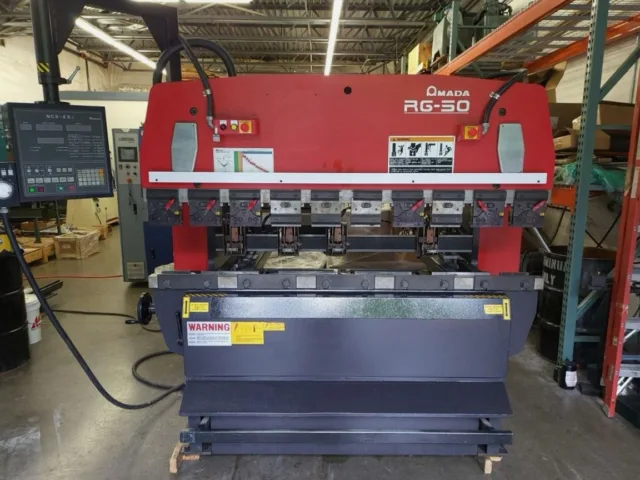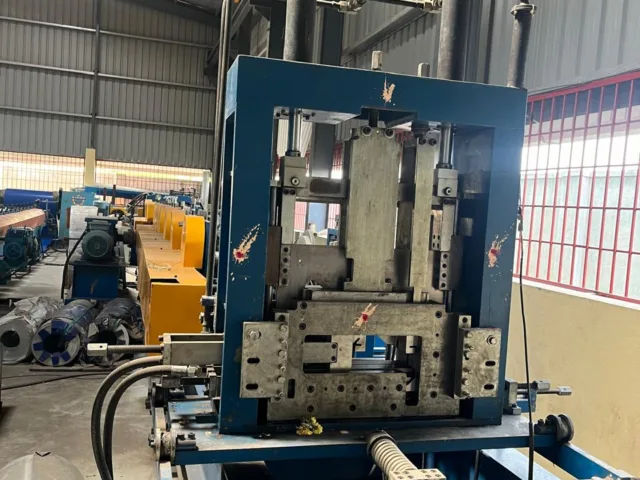
A used roll former is sold as-is almost every time, so the inspection is your warranty. This checklist covers the parts that wear, the parts that get damaged in transport, and the paperwork that decides whether you can finance, insure and resell the machine. Print it, take it to the seller’s yard, and do not skip the test run. It applies to portable roof panel machines from New Tech Machinery, Englert, Zimmerman, StanGroup and similar makers, and most of it applies to in-plant lines as well.
Before you travel
- Get the make, model, serial number and year, and confirm the model with the manufacturer if the listing is vague.
- Ask for the hour meter reading on hydraulic machines and a photo of it.
- Ask for a written list of what is included: profiles, rib rollers, shear dies, power pack, controller, reel rack, arbors, run-out tables, cover, trailer, manuals.
- Ask for a short video of the machine running a panel from coil to shear.
- Ask whether the seller is the original owner and whether the maker’s service department has worked on it.
- Check the maker’s current price for an equivalent new machine so you know the ceiling. Our price guide has the 2026 numbers.
What to bring
- A coil of your own material if the seller has none, ideally 24-gauge painted steel, which shows oil canning and roller marks more than aluminum.
- A 25-foot tape, a 4-foot level or straight edge, a square, calipers or a gauge wheel, and a flashlight.
- A phone for photos of the serial plate, hour meter, controller screens, rollers and any damage.
- Gloves and safety glasses; you will be reaching into the machine with covers open.
- A trailer brake controller in your truck if you plan to tow it home the same day.
Forming rollers
The forming rollers shape the seam and are the most expensive thing to replace. On NTM machines they are stainless steel and carry a limited lifetime wear warranty for the first owner; on other makes they may be chrome-plated steel. Open the covers and look at every station.
- Rust pitting, scoring or grooves on the roller faces, especially on the seam-forming stations near the exit.
- Flat spots or chipped edges from running a panel with a lap or a tool left in the machine.
- Side-to-side play in the roller shafts; grab each roller and rock it.
- Paint, sealant or coil coating built up on the rollers, which marks panels and hides wear.
- Confirm every profile set the seller lists is physically present, labeled, and complete; an incomplete set is worth very little.
- Ask when the rollers were last changed and whether the quick-change or swap hardware is all there.
Drive rollers and drive train
Polyurethane drive rollers pull the material through without marking it. NTM uses 8 on the SSR and SSH and 16 on the SSQ II and SSQ3, and warranties them against separation from the hub. Worn drive rollers cause slip, length errors and marked panels.
- Cuts, chunks missing, glazing or flat spots in the polyurethane.
- Any sign the urethane is separating or delaminating from the steel hub.
- Chain and sprocket wear: tight spots, rust, stretched chain, missing tensioners, and whether the gear covers are sealed and intact.
- Grease on every zerk fitting; dry fittings mean the machine was not maintained.
- Run the machine empty and listen for clicking, grinding or a chain slapping the cover.
Hydraulics and power pack
Hydraulic machines (SSH, SSQ II, SSQ3 and most commercial portables) have a pump driven by a gas engine or an electric motor, a reservoir, valves and hoses. Electric-drive entry machines such as the SSR skip the hydraulics and the shear is manual.
- Hour meter reading, and whether it matches the wear you see.
- Oil level and condition; milky oil means water, black oil means neglect, and a burnt smell means the pump has been hot.
- Leaks at the pump, valve block, cylinder seals and every hose fitting; look under the machine after it has run ten minutes.
- Hoses: cracking, bulging, abrasion where they pass through the frame.
- Gas engine: cold start, idle, smoke, oil level, air filter, battery, charging voltage and the fuel shutoff. A 16 HP Briggs & Stratton is standard on NTM hydraulics.
- Electric motor: nameplate voltage and phase (220 V single-phase at about 20 amps or three-phase at 18 amps on NTM options), cord condition, plug type and whether it matches your shop or generator.
- Quick-change power packs: confirm the mounting hardware and both the gas and electric units if two are included.
Controls and electrical
- Identify the controller: manual run and jog, PLC batch and length, or a full automatic system with a touchscreen. Note the software version shown at boot.
- Enter a batch of three panels at a set length and confirm the machine stops and shears on its own.
- Test every button, limit switch, emergency stop and the remote if one is included.
- Check the enclosure for water intrusion, corrosion on terminals and chewed wiring.
- Ask the maker whether this controller generation is still supported with parts and service.
- Confirm cover sensors and safety interlocks work if the machine has them; a bypassed interlock is a red flag for how the machine was run.
Shear and dies
- Blade condition: chips, rolled edges and the gap setting. Hardened tool steel blades can be sharpened a limited number of times.
- Shear dies: one set per profile. Confirm each set is present and matches a profile that is included.
- Cut quality: the panel end should be square, flat and free of burrs or crushed seams.
- Hydraulic shears: stroke speed, return and any drift when idle. Manual shears: the handle, pivot and return spring.
- Panel recognition sensor on machines that have one; it must see the panel or the shear will not cycle correctly.
Coil handling
- Overhead reel rack: straightness, welds, brake, and the coil weight rating on the plate. NTM rates its dual rack for two 3,000 lb coils without notching and two 2,700 lb coils with it.
- Expandable arbors: full expansion and release, inside diameter range, and the drive key.
- Free-standing decoiler if included: mandrel, brake and base condition.
- Entry guides and edge guides: straight, adjustable and locking.
- Run-out tables: count them, check the legs and rollers, and note that new ones list at roughly $950 per 10-foot section.
The test run
Nothing on this list matters as much as watching the machine make panels. Load coil, run at least three panels of 20 feet or more, and check them on a flat surface.
- Length accuracy: measure all three; they should match each other within an eighth of an inch and match the setting.
- Straightness: sight down the seam and lay the panel on a flat floor; bow, camber or twist points to roller alignment.
- Seam geometry: measure seam height and check that a clip and a second panel engage properly.
- Surface: look for roller marks, scratches and oil canning in raking light.
- Speed: time 20 feet and compare to the rated speed (about 30 ft/min for an SSR, 60 for an SSH, up to 75 for an SSQ II on gas).
- Change to a second profile if one is included and repeat; a seller who will not demonstrate a changeover may be hiding missing parts.
Trailer
A factory trailer lists at $19,000 to $19,650 new, so its condition is a real part of the price. A hydraulic portable on its trailer weighs 4,600 to 6,500 lb depending on model and options, which means a trailer with working brakes and a truck rated to tow it.
- VIN plate present and matching the title; GVWR rating on the plate.
- Axles, springs, hubs and bearings; feel for heat after a short tow if possible.
- Tires: date code, tread, sidewall cracking, and a matching spare.
- Electric brakes, breakaway switch and battery, lights and the plug.
- Frame and deck rust, cracked welds at the tongue, and the jack and coupler.
- Machine tie-downs and the cover or enclosure; a torn cover means the machine has been wet.
Paperwork
- Trailer title in the seller’s name, free of liens, with a bill of sale that lists the machine serial number separately.
- A lien search or payoff letter if the seller financed the machine; the lender’s lien does not disappear when you pay the seller.
- Original invoice showing what the machine shipped with.
- Operator and parts manuals, controller manual, and any software or license keys.
- Service records, especially any factory service visits or roller replacements.
- Written confirmation of what is included, signed by both parties, before money changes hands.
Turning findings into a price
Use the maker’s current accessory prices to put a number on anything missing or worn. For NTM machines in 2026 those include a trailer at $19,000, a second quick-change power pack at $9,300, expandable arbors at $2,800 a side, a dual overhead reel stand at $3,500, a remote at $2,700 to $2,900, a PLC batch and length controller around $12,100 and run-out tables at about $950 a section. Drive rollers, forming rollers and shear blades are quoted by the maker against the serial number, so call before you make an offer rather than guessing. If the seller will not let you run the machine, walk away; a working roll former is not hard to demonstrate.
When you are ready to shop, every roll former listed here shows the price, year, power pack and tooling so you can compare before you drive. Brand pages for New Tech Machinery, Englert, Zimmerman and StanGroup group the portable machines by maker, and our NTM model comparison explains which class fits your work.