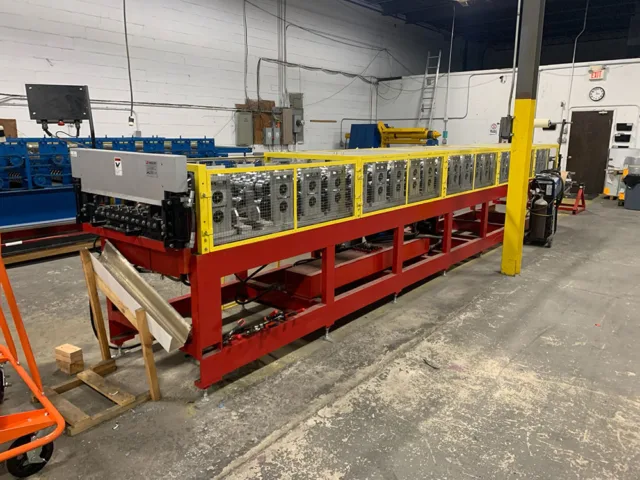
Imported Wave panel machine
$195,000
Exposed fastener panel roll formers make through-fastened roof and wall panels, the ribbed and corrugated profiles common on agricultural buildings, post-frame barns, shops and light commercial jobs. These lines are usually shop-based, with more roller stations than a portable standing seam machine, a run-out table, and often a pre-cut or post-cut shear matched to the profile.
Read How to Buy a Used Roll Former and Moving & Shipping a Roll Former before you commit, since long lines need planning to rig and haul. Many shops pair these lines with decoilers and cut-to-length lines.
1 machine
$195,000
Some lines are built for a single profile, while others use changeable roller sets or double-deck designs to run two profiles. Ask the seller exactly which profiles are included, whether the shear dies for each are present, and how long a changeover typically takes. Missing dies or rollers for a second profile can make a bargain line far less useful.
It varies by line. Many shop roll formers run on three-phase power, and hydraulic shears add their own requirements. Read the motor and control plates, ask the seller for the electrical specification, and have an electrician confirm your shop can supply it before you buy. Converting power can add real cost to the project.
Ask for a recent sample panel or a video measuring one. Compare coverage width, rib height and rib spacing to the profile drawing or a panel you know is correct. Check that panels lap properly side to side. Small errors add up across a roof, so accurate measurement matters more than appearance.